I start a lot of projects. Some turn into things I use every day. Others end up as source code, a box of parts, or a domain I no longer own. I don’t think every project has to become a company to have been worth building.
This is where some of the finished ones ended up. The years are rough end dates, not launch dates. I’m sure I’ve forgotten a few, and I’ll add them when I find them.
No Click Rip — 2012
I was really into Windows Media Center and the early days of connecting a PC to your TV. Netflix had just gotten big, and DVDs still showed up in the mail. I wanted to put one in the computer and have it appear in my media library without a bunch of clicking, so I built No Click Rip. It watched for a disc and could rip it to an ISO or an MP4.
I even sold a few copies. That still makes me smile: a little utility I made for my own living room found its way into somebody else’s. The code is still on GitHub, even though the world it was made for has mostly moved on.
Picsplode — 2016
When I was deep into photography, I started building Picsplode. I wanted it to work locally first, on the computer where the photos already lived. The archive still has that desktop application, along with the beginnings of a web app and API. There’s even a finished logo. Apparently I took the name seriously.
I still think it was a good idea. It also reminds me how much of a product is outside the initial idea: making the local workflow work well is one job; turning it into something other people can use is another. Picsplode never became a tool I kept running, but I put a lot into it.
displayhop — 2017
I built software for commercial displays: calendars, menus, and other information that belongs on a screen people walk past. I liked the problem enough to try my own version, displayhop.
There was a web app and a service to drive the displays. The appeal was that the screen could be useful without someone standing there operating it. I don’t run displayhop now, but the code is a reminder of a kind of software I still enjoy: something quiet that just does its job in the background.
DroidOS — 2017
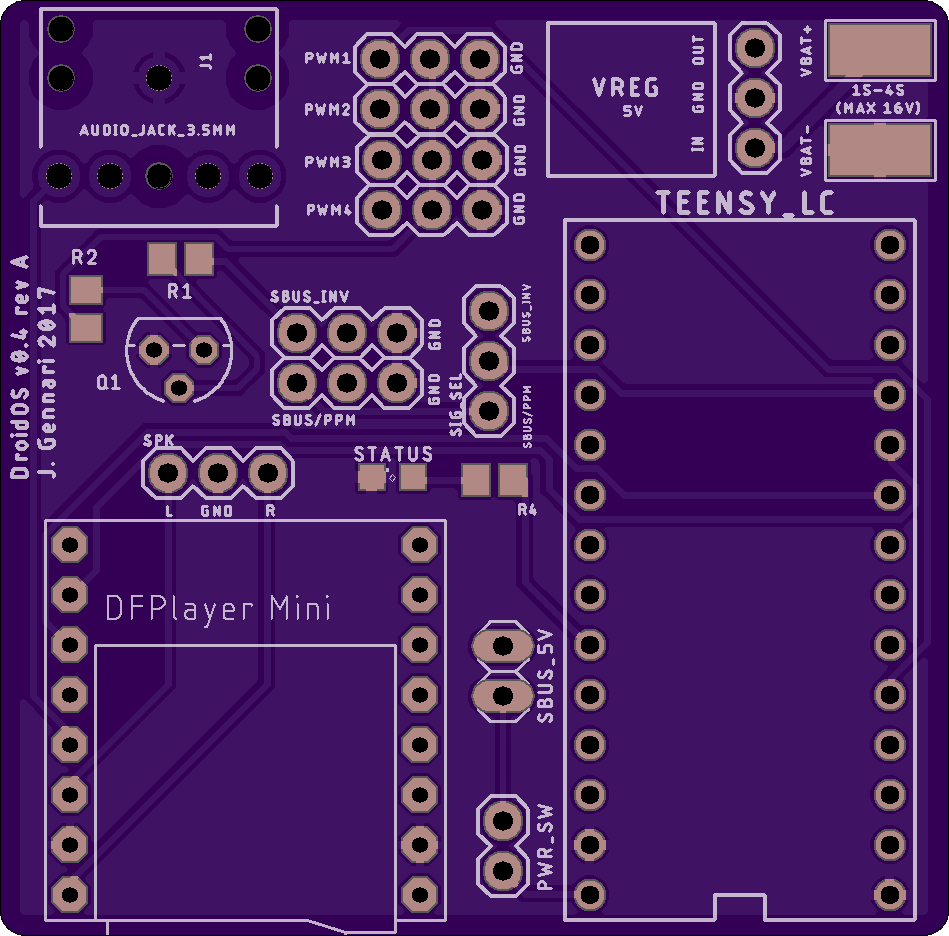
Patrick and I worked on an R2-D2 together. He did the construction; I did the electronics. DroidOS was the Arduino-based control system I built for it. It read the radio receiver and handled things like lights and sound.
We got far enough to design a board and make the controls work. I still like seeing software leave the screen and become part of something physical. The repository has the board and code, but the droid was very much a joint project.
ScoreKeepr — 2017
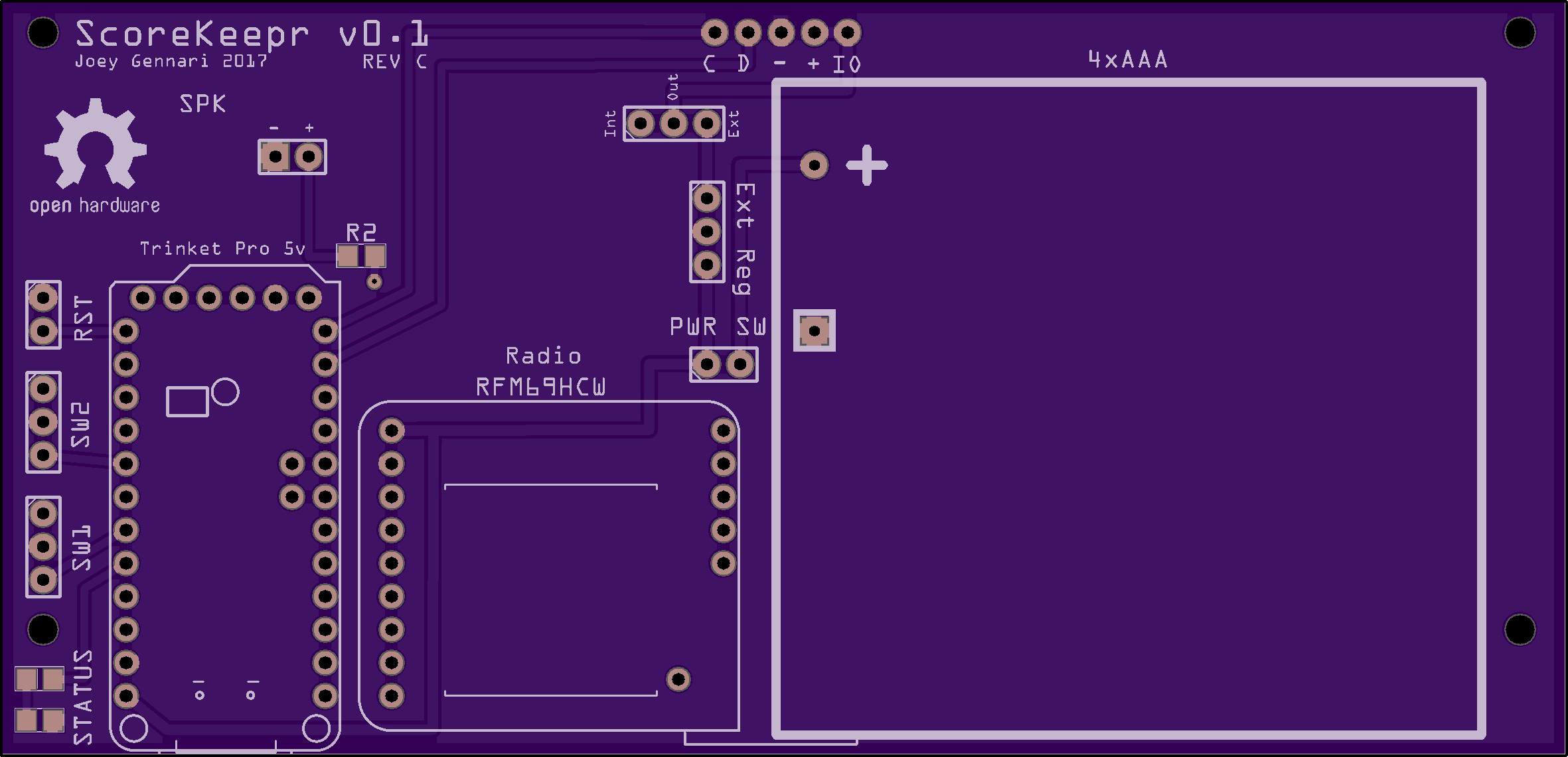
ScoreKeepr was a wireless scorekeeper for games like cornhole and table tennis. This one made it off the screen. I designed a circuit board, modeled and 3D-printed a case, assembled it, and wrote the firmware. The finished prototype worked, and it was even shown on one of Adafruit’s livestreams.
The repository has photos, build instructions, and a video of it working. I wrote down the mistakes, too, including an incorrectly sized power regulator and a speaker footprint that didn’t match the part I ordered. That’s a much more useful souvenir than pretending the first board was perfect.
RigPod — 2022
RigPod was a 3D-printed phone holder for a CrossFit or lifting rig. Magnets held it to the steel, and the holder could grab pretty much any phone. I printed and revised several versions, made renders and a logo, and got as far as a real physical prototype.
Then MagSafe made sticking a phone to things a whole lot easier. RigPod still solved a particular problem, but the broader reason to keep developing it got thinner. I kept the models and stopped working on it.
Movment — 2026
After COVID, a friend needed a way to livestream yoga classes from her studio. I built Movment to help her do it. This wasn’t an idea in search of a user; there was a person who needed the software, and she used it.
I had plans to make it work for other studios, but we never really expanded beyond hers. She sold the studio, and the reason Movment existed went with it. I tried different versions and technologies along the way, but movment.io as a product is done.
Kalla — 2026
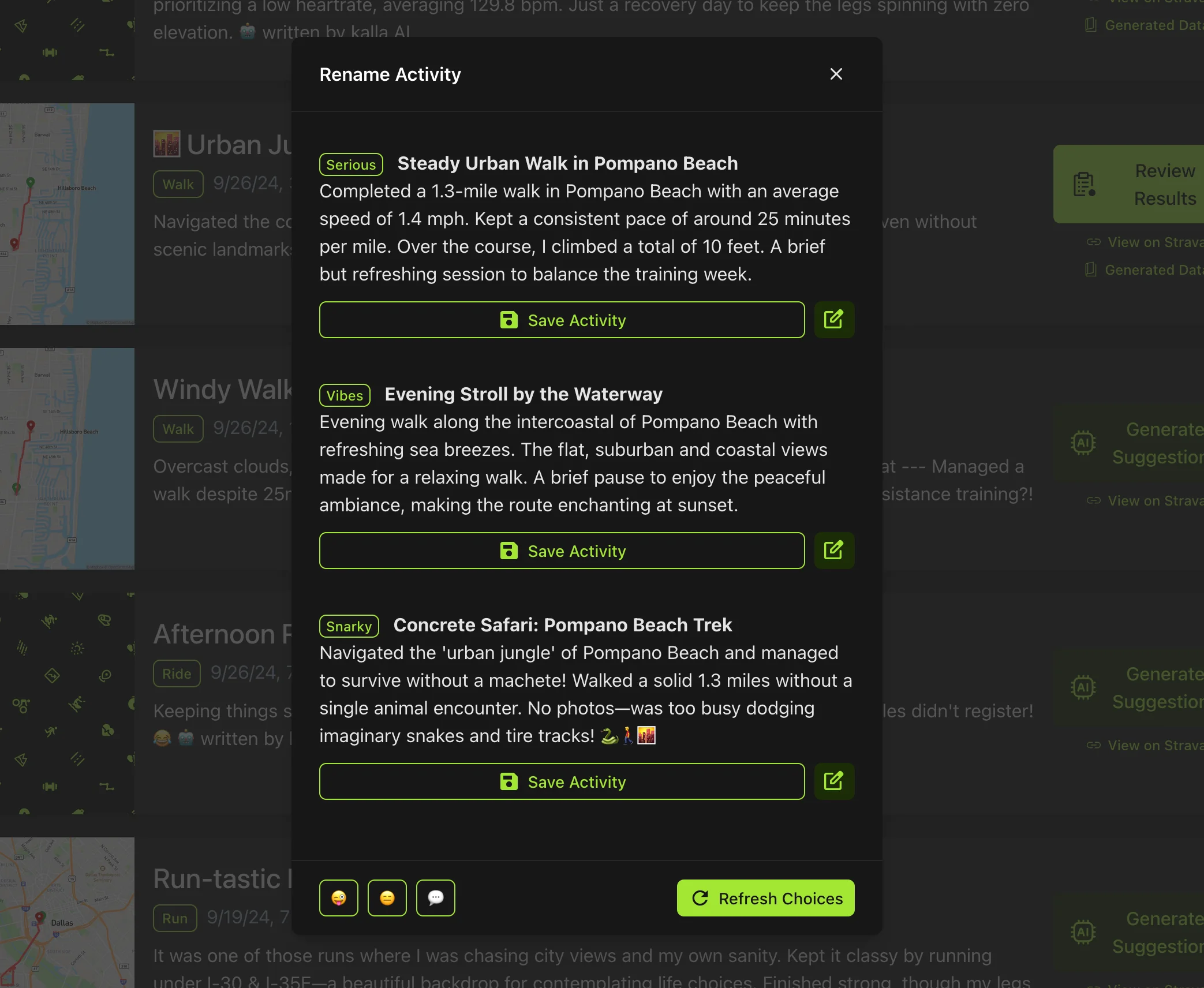
Kalla started with a question I liked: what if I could talk to my workout data and get some help making sense of it? I built a web app, worked on an iOS app, connected fitness data, and experimented with AI-generated titles and descriptions. I wrote about the first Nuxt version when I was still figuring out the framework.
It got further than a weekend experiment, but usage stayed limited. Meanwhile, apps like Runna were getting very good at serving this market. I retired Kalla in 2026. I still like the idea, and I learned a lot building it; neither of those is a reason to keep paying for and maintaining a service people aren’t really using.
There are more projects in the archive. These are the ones with stories I can tell today.